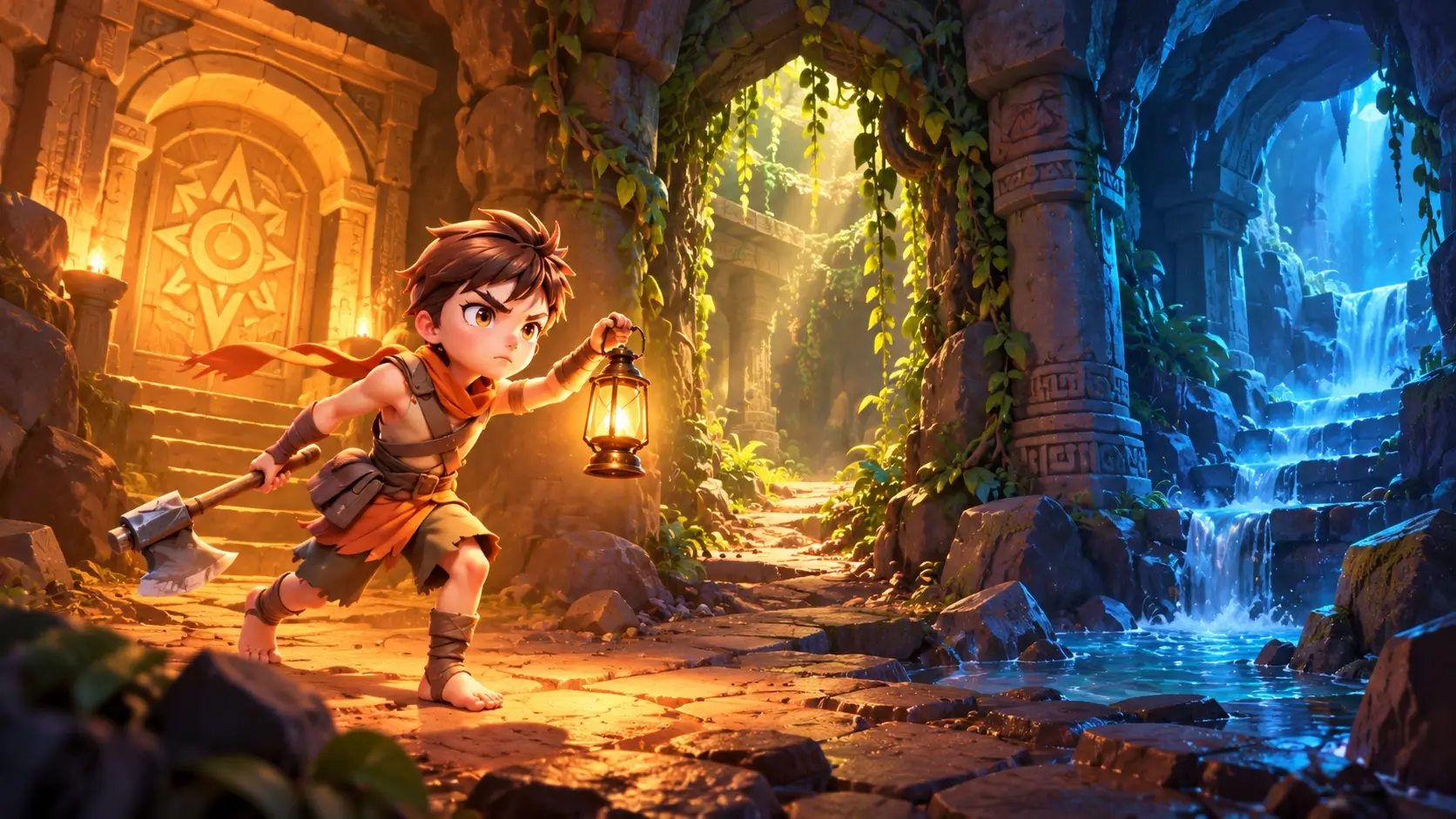

Why the pause between expeditions can be just as important as the adventure inside a dungeon.
A familiar place to return to
An expedition feels different when there is a place to come back to. Camp offers a light you recognise, a collection of useful objects and a small routine that helps the adventure settle. In Tiny Trailblazer, that familiarity is a deliberate counterpart to changing paths and surprising encounters. It does not erase the uncertainty of a run; it gives that uncertainty a comfortable frame. You can be bold beyond the gate because returning is part of the journey, whether the bag is full or the expedition ended before you expected.
Turn a run into an idea
The useful question at camp is not only what you collected. It is what you learned. Perhaps a combination worked well in one room and badly in another. Perhaps a clue made sense only after an encounter. Looking back creates the next experiment. A quiet space gives you time to compare those observations without asking for another quick reaction. The transition matters: the dungeon rewards attention in the moment, while camp helps you understand the pattern across an entire run. Each supports a different part of the adventure.
Preparation without a perfect answer
Preparing a hero should offer useful choices without reducing the next expedition to a solved equation. You can set an intention, carry a favourite tool and leave room for a surprising discovery. A flexible plan gives the run its character. If every decision must be settled before you leave, the dungeon becomes a test of preparation rather than a place to explore. Camp therefore works best when it helps you begin with confidence while preserving curiosity about what the next path might ask you to do.
Details that suggest everyday life
A lived-in camp needs more than a row of menus. Tools arranged beside a workbench, a worn path between familiar corners and objects collected from earlier trips can suggest a place people use. The details do not have to compete with the player's choices. They make those choices feel situated in a world. Even a small gesture can help: a hero checking a bag, a lantern being adjusted or a companion waiting near the gate. Preparation becomes a moment in the story instead of a screen that interrupts it.
Leave with one good question
The next run does not need an elaborate plan. One good question can be enough. Could that trinket support a slower approach? What was beyond the passage you left unexplored? Would a different pairing make a familiar encounter more playful? Taking a question out of camp makes a return feel purposeful. You are carrying an idea that belongs to your previous adventure, and the world has a chance to respond. That simple rhythm turns separate expeditions into a continuing relationship between a little hero and a place full of possibilities.