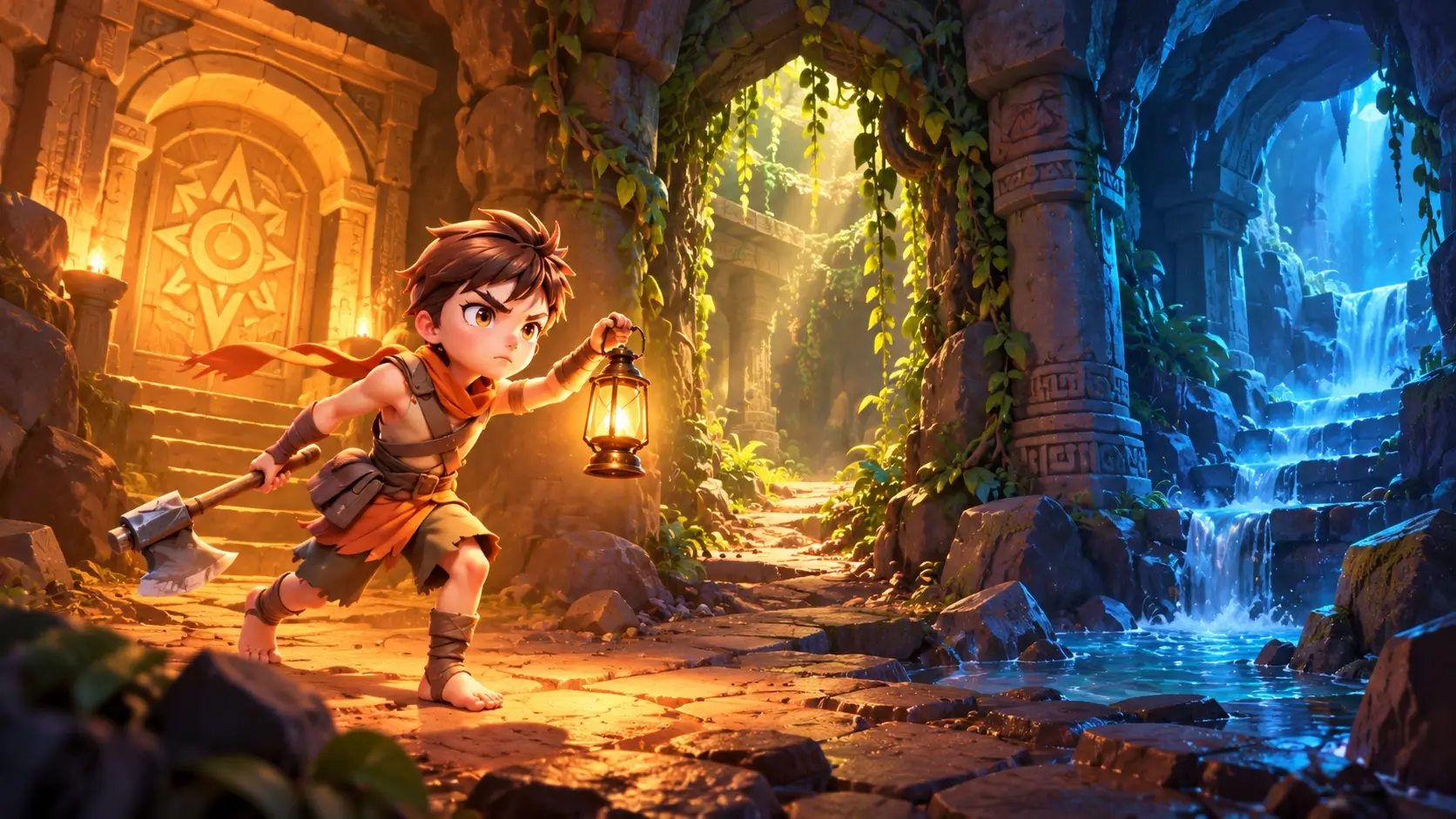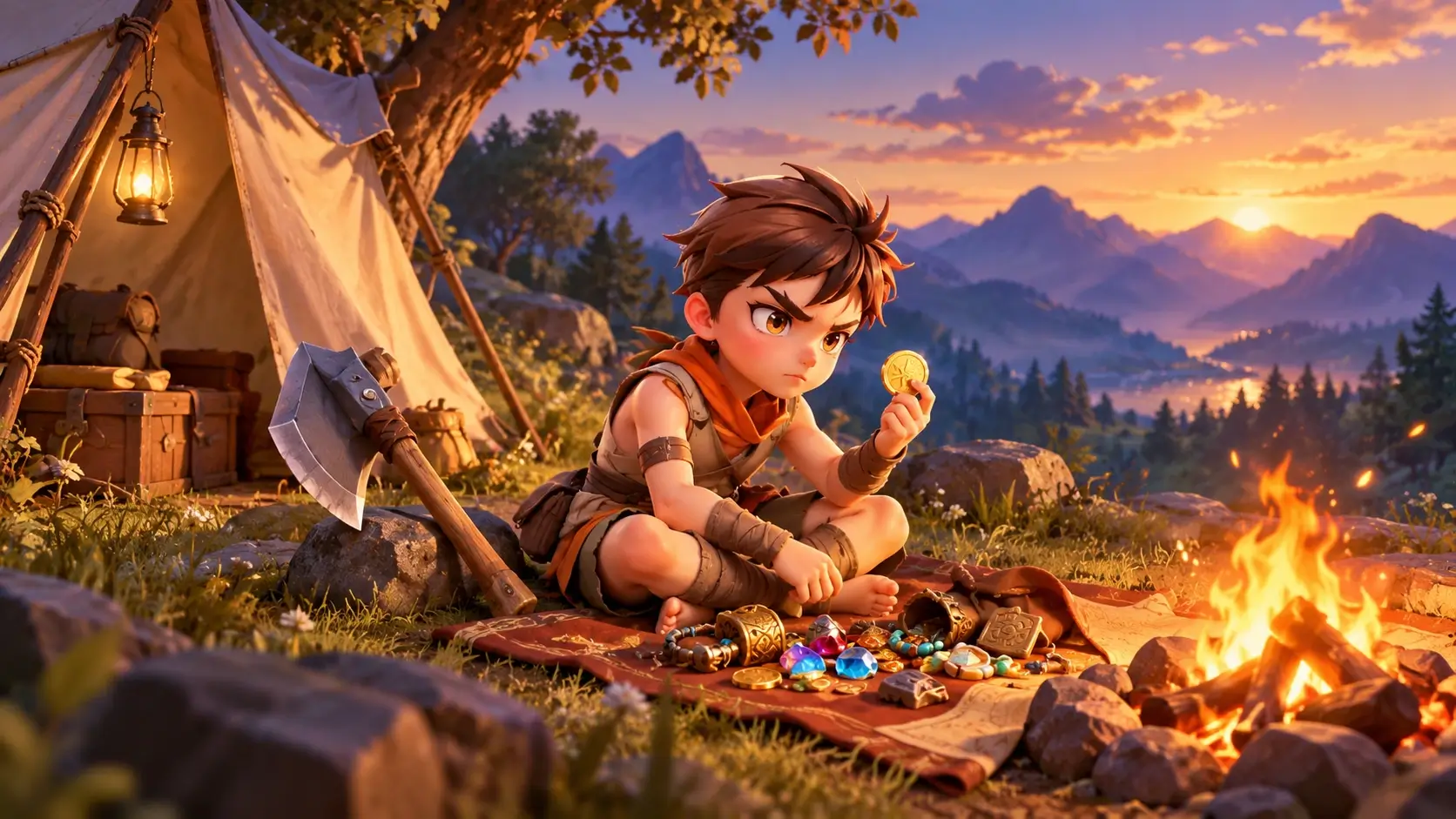
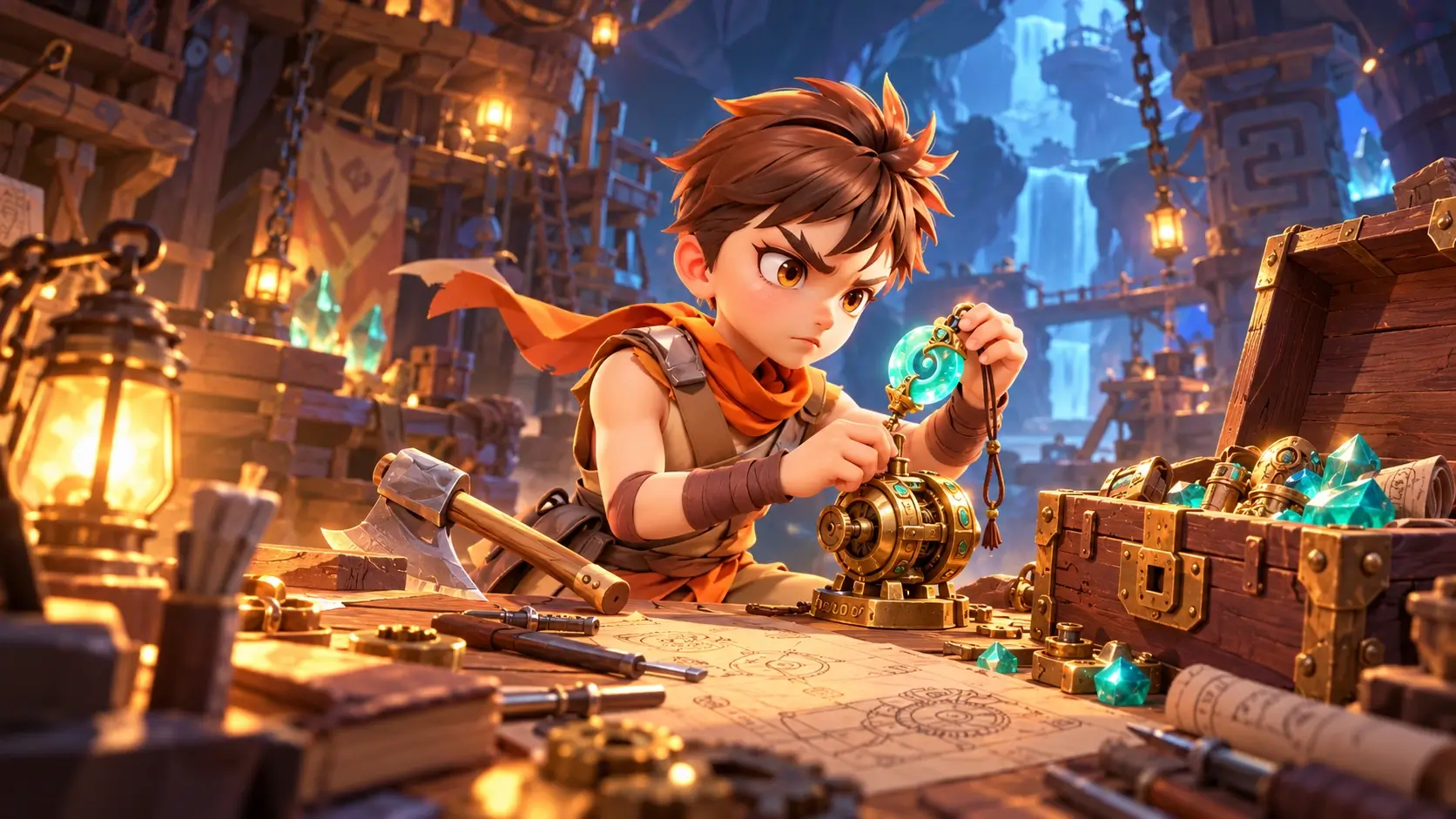
A good trinket changes a decision, a familiar encounter or the way you imagine your next run.
More than a reward
A treasure becomes interesting when it gives you an idea. A polished stone, a crooked charm or a little mechanism made from mismatched pieces can do more than increase a number. Each should suggest a possibility you can test. Tiny Trailblazer treats these discoveries as invitations to experiment. You might recognise a pairing immediately, or carry something for a while before finding the situation where it becomes useful. The reward is partly the object itself and partly the moment you understand what you could do with it.
Make an effect readable
An unusual effect needs a clear language. If a gadget changes the reach of a move, the response should be visible in the hero's action. If a charm works only in a particular situation, the environment should help you notice that situation. A player should be able to form a reasonable expectation, try a move and compare the result with the idea. Mystery can remain in the combinations without hiding basic information. That balance makes experimentation feel curious instead of confusing, especially when the pace of an expedition becomes lively.
Combinations tell small stories
The best combinations are easy to describe afterwards. You found a tool that made a cautious plan more playful, or joined two modest objects into something unexpectedly useful. Those stories do not require every combination to be equally powerful. They need a meaningful relationship between the discoveries and the choices you made. A room that once encouraged a quick dash may now invite a patient approach. A familiar obstacle may become the place where your odd collection finally makes sense. The dungeon changes because your attention has changed.
The value of a trade-off
Choosing a treasure can also mean choosing what to leave behind. A limited collection encourages you to think about the run you are building rather than keeping every possible option. Would you prefer a reliable tool or a more surprising effect? Does the new discovery strengthen your current plan, or tempt you to change it entirely? A good trade-off remains understandable without being obvious. It creates a pause that belongs to the player, a small chance to take ownership of an expedition before the next encounter begins.
Bring the idea back
Camp is where those choices become useful knowledge. You can remember a pairing that worked, a discovery you misunderstood and a treasure you would like to test again. A new run then starts with an idea rather than a blank inventory. That is why personality matters in the objects you find. A memorable shape and a clear effect make a treasure easier to recognise, discuss and revisit. Over time, your collection becomes more than equipment. It becomes a record of the little experiments that gave each adventure its character.